CarMedialab is proud to be at the forefront of innovation in the field of e-mobility. We are pleased to present MOBILEcharge‘s latest and worldwide unique feature: Multi-Operator Support, also known as “multi-tenancy”.
Mastering the transformation of mobility Due to the rapid changes in mobility, many transport operators are faced with the challenge of using their charging infrastructure effectively and safely. This is the case especially when they work with multiple bus operators sharing a depot or even have a presence in different cities with diverse depots.
Full control over your bus fleet This is exactly where multi-operator support comes in. It allows operators to load their buses only at specific points designated to them. While bus operators retain full control over their fleet, the buses move exclusively within their assigned load limits. But that’s not all: each operator can be assigned individual tariffs or interfaces, making the system customizable.
The central solution For transport operators who are present in several cities and operate different depots, Multi-Operator Support offers one central solution. Everything can be controlled and monitored conveniently via the MOBILEcharge system, no matter how spread out or different the depots may be.
Unique and smart MOBILEcharge’s Multi-Operator Support provides transport operators with a feature that is so far unique in the industry at this point in time. The feature offers a smart but simple way to get the most out of the charging infrastructure and simplifies the complex challenges of charge management. At CarMedialab, you will find solutions that are not only smart, but also user-friendly. We will guide you into the future of e-mobility.
Stay tuned for more exciting updates!
Introducing Multi-Operator Support for MOBILEcharge
E-mobility is no longer just an option – it is the path to a sustainable future. Our latest whitepaper, “Step by step to your electric bus fleet,” serves as a comprehensive guide for anyone who is ready to take this crucial step.
You will receive a comprehensive overview of the necessary steps in the transition to electromobility. We also provide valuable insights into the effective planning and implementation of charging operations, complemented by useful tips and proven strategies based on CarMedialab’s expertise.
In the modern energy landscape, two key strategies are essential to efficiently manage energy consumption: peak shaving and load shifting. But what do these terms mean and how do they relate to electric bus charging?
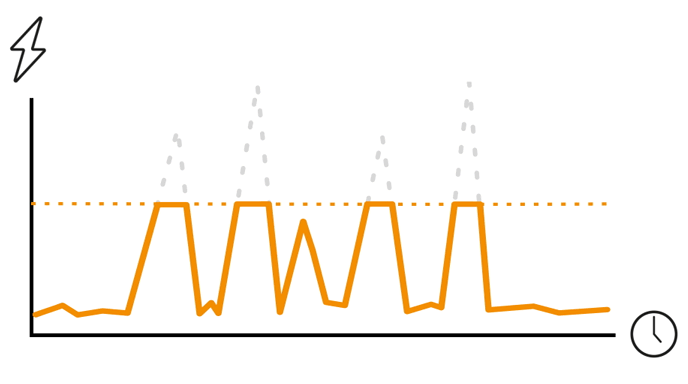
How does peak shaving work? Peak shaving aims to reduce energy consumption during periods of high demand. The main goal is to ensure that the capacity of the power grid is not exceeded, which can lead to grid congestion and outages. By targeting energy demand, peak shaving can significantly reduce overall costs for both utilities and their customers. Using an energy management system, consumers can forecast and manage their future electricity consumption. This makes it possible to avoid peak loads by, for example, postponing certain processes or throttling electricity consumption during peak periods.
Is peak shaving useful? Yes, and for several reasons. Peak shaving can prevent power grid overloads, thereby extending battery life. For companies and institutions, it can also result in significant savings on utility rates. It is a valuable tool that can be of particular benefit to companies.
Load shifting: take advantage of favorable times In contrast to peak shaving, load shifting shifts energy consumption from times of high demand to times of lower demand. This offers the advantage of allowing companies and households to benefit from lower electricity rates while relieving pressure on the grid.
Optimize e-bus charging How do peak shaving and load shifting relate to electric buses?
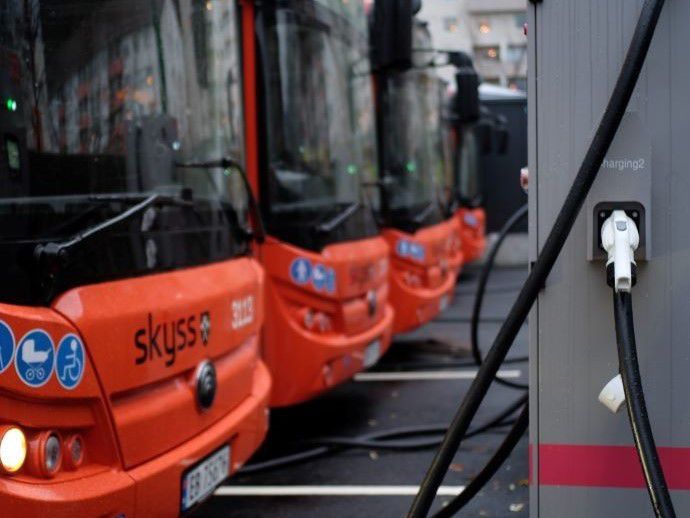
For transport companies, the question is central: How can electric buses be charged cost-effectively? A sophisticated charge management system is the key here. Targeted charging profiles for your entire depot prevent peak loads and make optimum use of peak shaving. Individual charging profiles precisely control when and how intensively each bus is charged so that it can start its service on time and fully charged – this is effective load shifting in real time. Take advantage of these strategies and ensure your company not only gains efficiency, but also significant cost savings when charging your e-bus fleet.
For more information on CarMedialab’s charge management system, click here: MOBILEcharge. If you have any further questions, please feel free to contact us via our contact form.
C-TRAN, the public transit provider in Clark County and the Vancouver-Portland region, has added ten new all-electric buses to its fleet. This is an important step toward achieving the goal of a completely zero-emission fleet by 2040. The new e-buses are not only environmentally friendly, but also efficient and quiet, with a range of 200 miles.
To maximize the efficiency and performance of its buses, C-TRAN chose to work with CarMedialab and INIT for two of their solutions.
C-TRAN will deploy the vehicle monitoring system MOBILEvhm. This system will help C-TRAN to keep track of the performance of its entire bus fleet, whether it is its diesel or electric buses, at any time.
In addition C-TRAN will also use the MOBILEefficiency driver assistance. This system supports drivers in learning and maintaining an energy-efficient driving style.
“Sustainability is at the core of who we are as a public transportation provider, and battery-electric buses are crucial to our zero-emission future,” said Eric Florip, C-TRAN’s manager of communications and marketing. “We’re excited to partner with INIT and CarMedialab to improve the performance of these vehicles, and the experience for our riders.”
This partnership between C-TRAN, CarMedialab and INIT is a clear sign of these organizations’ commitment to a sustainable and efficient future for public transportation. With the introduction of these new technologies, C-TRAN will be able to provide even better service to its passengers while minimizing its environmental impact.
We are excited to have won the tender, and from now on we will work together to advance the electrification of public transport in Israel.
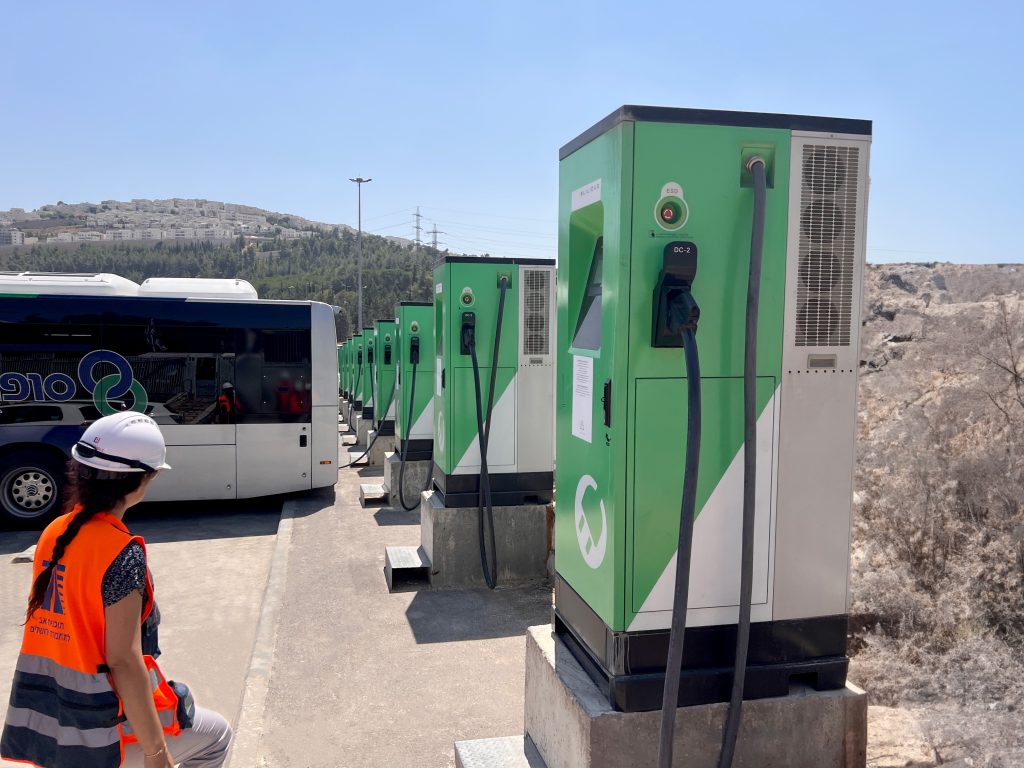
Charging stations throughout Israel will be connected Ayalon Highways, a nationwide infrastructure provider in Israel, has contracted CarMedialab to integrate the charge management system MOBILEcharge into hundreds of electric bus charging stations. This will be done in dozens of depots across the country, ensuring smooth operation and efficient use of the electric bus fleet.
“We chose CarMedialabs charge management system for all our bus depots all over Israel. MOBILEcharge will help us to have a maximum number of buses available on time with minimal use of the grid and minimal costs. Let the electrification revolution begin!“ – Shirley W., Product Manager at Ayalon Highways
Charging stations of the e-busses in Tel Aviv
Increase efficiency and save costs MOBILEcharge is an intelligent charge management system that not only monitors and controls the charging of electric buses, but can also integrate various interfaces. These interfaces enable seamless communication with depot management as well as other relevant systems. Thus, operators can better manage their electric fleets, optimize operations, increase efficiency and save costs at the same time.
Multiple operators sharing the same infrastructure MOBILEcharge is rolled out in multitenant mode in order to support the case that multiple operators use the same charging infrastructure. Charging stations are assigned to operators based on a concession, reserved only for a certain period of time or even a single charging event. By that, the operators see, control and have responsibility for only their stations and processes. They utilise their own energy tariffs and get their respective bills based on consumed energy.
Electric public transport for the climate This groundbreaking partnership between Ayalon Highways, the Ministry of Transport of Israel, CarMedialab and Optibus is a significant step towards greener public transport. Electric public transport not only reduces CO2 emissions, but also improves air quality and helps combat climate change.
Partnership with Optibus Optibus, a renowned company offering a SaaS platform, will help improve driver and vehicle planning and deployment optimization. The detailed insights into operations, punctuality and costs will enable operators to make public transport more efficient and meet the needs of passengers. MOBILEcharge receives dispatching information from the Optibus platform to optimize charging processes according to departure time.
CarMedialab is proud to be part of this unique project and to contribute its expertise in the field of electric mobility. We firmly believe that electric public transport is the future of mass transit and are committed to it with our innovative solutions.
Together with Ayalon Highways, the Ministry of Transport of Israel and Optibus, we are looking forward to a successful implementation of this project.
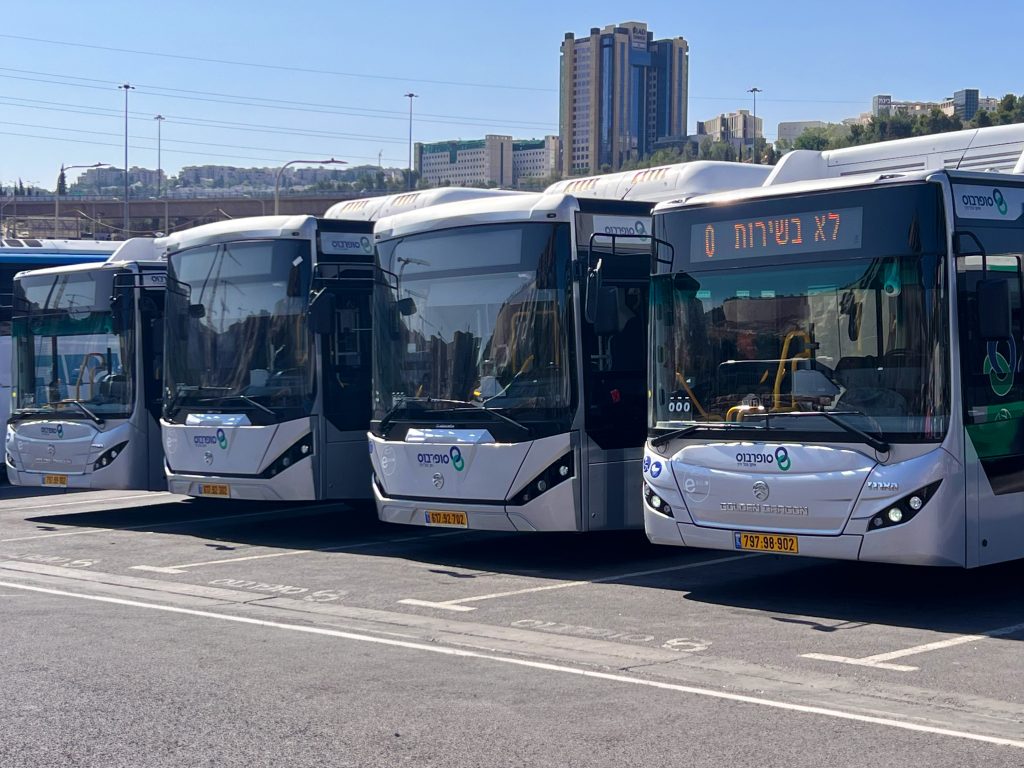
The e-buses are available at the depot in Tel Aviv
The project in the Senegalese capital Dakar is the INIT Group’s first project in Africa, which means that, with the exception of Antarctica, INIT is now successfully operating on all continents.
Sustainable solutions worldwide These projects will not only increase sustainability in public transport, but also help to change cities in a sustainable way, for example in Dakar. There, the transport operator DAKAR MOBILITÉ is in the process of electrifying the public bus network with the help of a Bus Rapid Transit project, while at the same time creating measures to combat congestion and pollution. Approximately 150 electric buses will be deployed by 2025, saving 59,000 tonnes of CO2 annually. In the long term, Dakar even wants to charge their bus fleet using 100% solar energy. This is the first project of its kind on the African continent.
In Israel, hundreds of charging points for e-buses will be connected with the smart charge management system in a joint project with the Israel Ministry of Transport and Road Safety and Ayalon Highways. Step by step, numerous charging points will be integrated in the depots throughout the whole country.
Société des Transports Intercommunaux de Bruxelles (STIB), one of the largest public transport operators in Belgium, recently signed a framework contract for MOBILEcharge. Over the next 10 years, up to 1,000 vehicles and 500 charging points from various manufacturers will be integrated there. By the end of this year, 50 charging points for up to 100 vehicles will be installed at the depot “Marly” and cost-effectively charged using MOBILEcharge.
MOBILEcharge is already being used by many companies in Europe and the USA for smart charge management. However, they not only rely on this powerful tool, but also on CarMedialab’s expertise when it comes to implementation. The company has made a name for itself in setting up and connecting complex system landscapes, is committed to interoperability and is intensively involved in the development of open systems and (VDV) interfaces.
MOBILEcharge – a smart charge management system
With MOBILEcharge, new and existing customers trust in a proven solution that guarantees cost-effective charging and ensures that buses are always available on time, sufficiently charged and preconditioned whilst also avoiding expensive load peaks. To intelligently manage charging processes, the charge management system should be connected to the MOBILE-DMS depot management system, which is where information is available about planned blocks for the next day and associated charging requirements. MOBILEcharge is part of INIT’s integrated product suite for electromobility, eMOBILE. This integrated overall system covers all the operational requirements of e-mobility and ensures that e-buses are introduced economically and operated efficiently.
INIT and CarMedialab lead the way in the field of electromobility INIT CSO and Deputy CEO Dr. Jürgen Greschner is very proud of these orders and underlines the importance of emission-free public transport:
“The decision makers for ambitious future projects in Brussels, Dakar and Tel Aviv have chosen INIT Group solutions for the electrification of their bus fleets. We are delighted that they have put their trust in us and we look forward to supporting them and other companies in the development and operation of their electric bus fleets. With these orders, the INIT Group is helping pave the way for sustainable mobility and continues to be at the cutting edge of electromobility.”
Presentation of the first electric bus out of 158 in total The company DAKAR MOBILITE wants to create sustainable solutions for passenger transport, road congestion and environmental pollution with the help of the Bus Rapid Transit project. On April 4, 2023, the first 100% electric bus was now presented on the occasion of Senegal’s 63rd Independence Day. Dakar celebrated this with a big parade.
In total, 158 electric buses are planned within the project. The vehicles, which are around 19 meters long and have a range of 250 kilometers each, can accommodate 150 passengers. The modern e-buses offer access for people with limited mobility, air conditioning, WLAN and USB ports on board. With the help of the electric buses, 59,000 tons of CO2 can be saved each year. In the long term, Dakar even wants to charge from 100% solar energy. This is the first project of its kind on the African continent. In addition, around 1,000 new jobs will be created during the operating phase.
We are proud to be a part of this unique project and to provide our innovative charge management system MOBILEcharge for this purpose. It allows real-time monitoring and tracking of the charging infrastructure and processes, enabling optimal fleet organization. In addition, MOBILEcharge ensures that the buses are always charged according to demand, cost-effectively and in a battery-friendly manner.
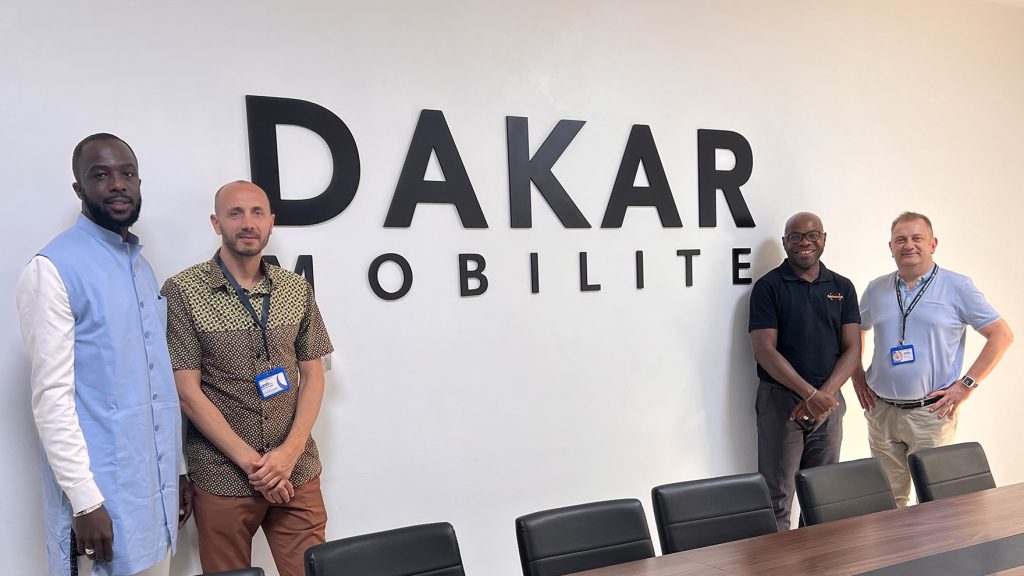
Last week, our managing director Henri Depe Tchatchu visited the Dakar Mobilité office to discuss the status of the project as well as interfaces to partner systems. We are looking forward to this exciting project and the launch of the first 100% electric bus fleet in Africa!
E-bus depots require an intelligent charging management system as a central node in data communication. This is shown by the experience of the last years of practical work. Learn more about the standard interfaces when charging e-buses so that all systems involved can interact smoothly.
CarMedialab and INIT will charge the e-bus fleet of STIB in Brussels STIB Brussels, one of the largest public transport operators in Belgium, recently signed a framework contract for the charge management system MOBILEcharge. During the next 10 years, up to 1,000 vehicles and 500 chargers from various manufacturers will be integrated there. Before the end of this year, 50 charging points for up to 100 vehicles will be installed at the “Marly” depot. The interfaces VDV 463 as well as VDV 261 will be integrated regarding the depot management system and for the preconditioning of the vehicles.
CarMedialab and INIT are looking forward to this project and to provide Brussels’ passengers with a reliable and sustainable public transport in the future.
A standard that was necessary from a technical and operational point of view This brand new VDV publication is all about data communication in buses. The Association of German Transport Companies (VDV) has published the new recommendation on this important topic in issue 1/2023. Members of the association are operators of local public transport and develop new industry standards based on existing needs. Mobile data connections are being used more and more frequently in order to be able to react quickly in an emergency. This ability to transmit data in real time is valuable because it is used to continuously improve processes and prevent problems. In the past, there was often the problem of time-consuming “negotiations” between the transport company and the vehicle manufacturer about access to thevehicle data, because no standardized regulation was available. Thanks to VDV 238, this is now a thing of the past.
Advantages through VDV 238 : Anticipating events
One use of vehicle data is so-called “predictive maintenance”. From historical and current data, a forecast for events in the future becomes possible.
Easy to use
Companies that are newcomers in the field of e-mobility receive a guideline through this framework recommendation and can avoid mistakes through already existing, shared know-how.
Security
It is determined from the beginning which data is received will be received and therefore set up in the initial process. The data to be transferred is already defined and no longer has to be negotiated individually between the transport operators and the vehicle manufacturer. A standard always provides security, as the technical details are defined, which ensures interoperability.
Independence from manufacturers
Each company can choose its own solution without being limited to one to a specific system. Even if vehicles from different manufacturers are included in a fleet, the same fleet, the same data is received.
Transparency
Only the information that is requested reaches the operators. In addition, initial discussions in the context of Tenders become easier for all parties.
Fleet efficiency, -amortization and AI development
Another benefit is that monitoring and analysis will increase fleet efficiency by preventing errors. In addition, more qualitative data can help develop artificial intelligence.
This VDV publication 238 is a very important step, because the analysis of vehicle data enables transport companies to draw important conclusions and make data-based decisions for the future, and for software and hardware manufacturers, market neutrality is ensured. We are very happy to be a part of this development and hope to see this writing in many tenders soon.