Tag: charge management

Optimal use of the charging infrastructure with Multi-Operator Support

CarMedialab is proud to be at the forefront of innovation in the field of e-mobility. We are pleased to present MOBILEcharge‘s latest and worldwide unique feature: Multi-Operator Support, also known as “multi-tenancy”.

Mastering the transformation of mobility
Due to the rapid changes in mobility, many transport operators are faced with the challenge of using their charging infrastructure effectively and safely. This is the case especially when they work with multiple bus operators sharing a depot or even have a presence in different cities with diverse depots.

Full control over your bus fleet
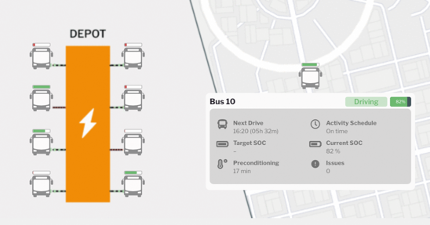
This is exactly where multi-operator support comes in. It allows operators to load their buses only at specific points designated to them. While bus operators retain full control over their fleet, the buses move exclusively within their assigned load limits. But that’s not all: each operator can be assigned individual tariffs or interfaces, making the system customizable.

The central solution
For transport operators who are present in several cities and operate different depots, Multi-Operator Support offers one central solution. Everything can be controlled and monitored conveniently via the MOBILEcharge system, no matter how spread out or different the depots may be.

Unique and smart
MOBILEcharge’s Multi-Operator Support provides transport operators with a feature that is so far unique in the industry at this point in time. The feature offers a smart but simple way to get the most out of the charging infrastructure and simplifies the complex challenges of charge management. At CarMedialab, you will find solutions that are not only smart, but also user-friendly. We will guide you into the future of e-mobility.

Stay tuned for more exciting updates!

Introducing Multi-Operator Support for MOBILEcharge

Step by step to your electric bus fleet

E-mobility is no longer just an option – it is the path to a sustainable future. Our latest whitepaper, “Step by step to your electric bus fleet,” serves as a comprehensive guide for anyone who is ready to take this crucial step.

You will receive a comprehensive overview of the necessary steps in the transition to electromobility. We also provide valuable insights into the effective planning and implementation of charging operations, complemented by useful tips and proven strategies based on CarMedialab’s expertise.

Get the free download now.

Savings through peak shaving and load shifting

In the modern energy landscape, two key strategies are essential to efficiently manage energy consumption: peak shaving and load shifting. But what do these terms mean and how do they relate to electric bus charging?

How does peak shaving work?
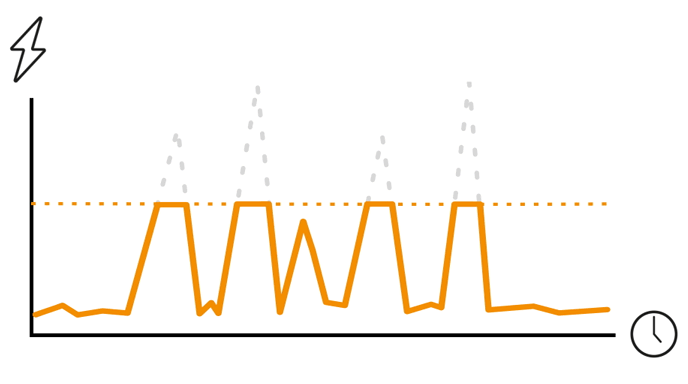
Peak shaving aims to reduce energy consumption during periods of high demand. The main goal is to ensure that the capacity of the power grid is not exceeded, which can lead to grid congestion and outages. By targeting energy demand, peak shaving can significantly reduce overall costs for both utilities and their customers. Using an energy management system, consumers can forecast and manage their future electricity consumption. This makes it possible to avoid peak loads by, for example, postponing certain processes or throttling electricity consumption during peak periods.

Is peak shaving useful?
Yes, and for several reasons. Peak shaving can prevent power grid overloads, thereby extending battery life. For companies and institutions, it can also result in significant savings on utility rates. It is a valuable tool that can be of particular benefit to companies.

Load shifting: take advantage of favorable times
In contrast to peak shaving, load shifting shifts energy consumption from times of high demand to times of lower demand. This offers the advantage of allowing companies and households to benefit from lower electricity rates while relieving pressure on the grid.

Optimize e-bus charging
How do peak shaving and load shifting relate to electric buses?

For transport companies, the question is central: How can electric buses be charged cost-effectively? A sophisticated charge management system is the key here. Targeted charging profiles for your entire depot prevent peak loads and make optimum use of peak shaving. Individual charging profiles precisely control when and how intensively each bus is charged so that it can start its service on time and fully charged – this is effective load shifting in real time. Take advantage of these strategies and ensure your company not only gains efficiency, but also significant cost savings when charging your e-bus fleet.

For more information on CarMedialab’s charge management system, click here: MOBILEcharge. If you have any further questions, please feel free to contact us via our contact form.

CarMedialab and INIT deliver energy-efficient software solutions to Vancouver, Washington

C-TRAN, the public transit provider in Clark County and the Vancouver-Portland region, has added ten new all-electric buses to its fleet. This is an important step toward achieving the goal of a completely zero-emission fleet by 2040. The new e-buses are not only environmentally friendly, but also efficient and quiet, with a range of 200 miles.

To maximize the efficiency and performance of its buses, C-TRAN chose to work with CarMedialab and INIT for two of their solutions.

C-TRAN will deploy the vehicle monitoring system MOBILEvhm. This system will help C-TRAN to keep track of the performance of its entire bus fleet, whether it is its diesel or electric buses, at any time.

In addition C-TRAN will also use the MOBILEefficiency driver assistance. This system supports drivers in learning and maintaining an energy-efficient driving style.

“Sustainability is at the core of who we are as a public transportation provider, and battery-electric buses are crucial to our zero-emission future,” said Eric Florip, C-TRAN’s manager of communications and marketing. “We’re excited to partner with INIT and CarMedialab to improve the performance of these vehicles, and the experience for our riders.”

This partnership between C-TRAN, CarMedialab and INIT is a clear sign of these organizations’ commitment to a sustainable and efficient future for public transportation. With the introduction of these new technologies, C-TRAN will be able to provide even better service to its passengers while minimizing its environmental impact.

How Public Transport can save our Planet

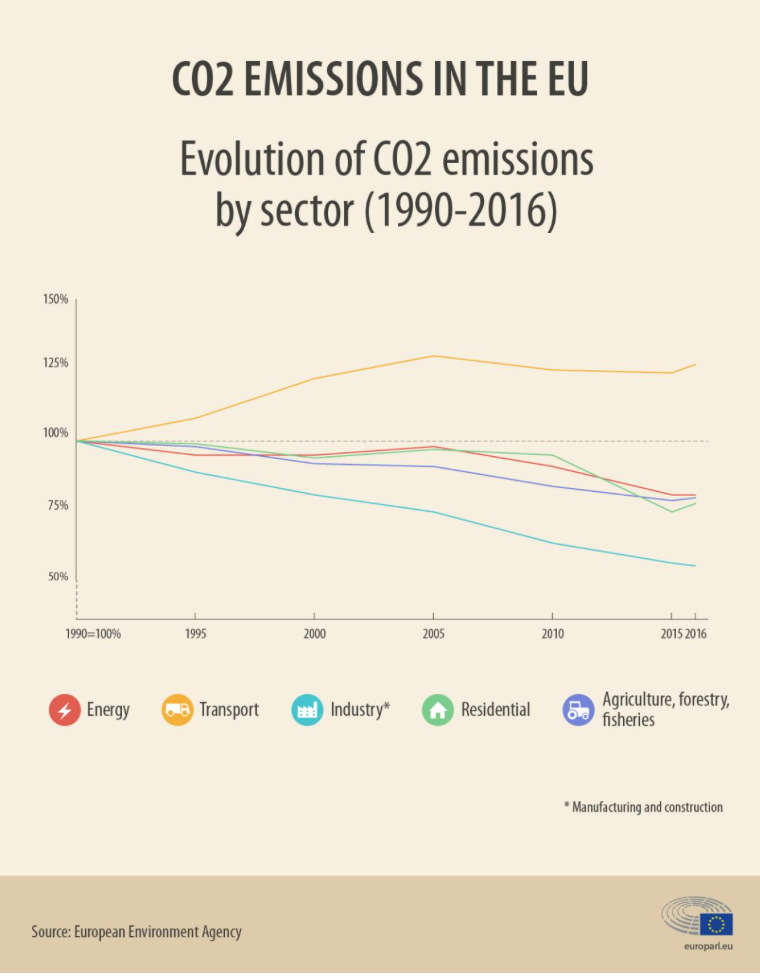
More and more we are concerned with the environment and the current state of the planet. Pollution and emissions from road transportation vehicles are still increasing.

https://www.europarl.europa.eu/news/de/headlines/society/20190313STO31218/co2-emissions-from-cars-facts-and-figures-infographics

https://www.eea.europa.eu/
CO2 Emissions from Transport on the Rise

The most sustainable form of Public Transport is currently electric buses
At the same time humanity is developing technology at a rapid pace to keep up with the environmental situation and help us solve this problem. We need to change from an emission-based transportation to a sustainable transportation model. At the moment the most sustainable way of public transportation that can be scaled is by electric buses.

The electric buses, or e-buses as they are also called, have become very popular. We face a new era where renewable energy is in high demand as emission-based energy seems to have an expiring date.

However, the decision of changing the whole fleet of buses in a city to a more sustainable solution is economically challenging, though necessary. And even when the fleet has been changed to electric buses, a lot of budget goes into the operation of the e-buses. This is part of the reason that the decision to change the fleet is not as easy as it might seem. It’s a complex decision as there are many aspects that need to be taken into consideration. 

The type of vehicle, the battery capacity ranges, weather and even the topography of the routes the buses will drive all have an impact on the expenses, as well as the different charging scenarios. All this adds up to weighing of costs.

E-Busses are charged with Priority

How is the transformation of the fleet successful?
This is where the charging management system MOBILEcharge helps you in collecting data through the software system integrated in the charging stations. The EV electric management software measures the need for charging the buses based on energy storage and how much power is left. It also makes sure to distribute evenly the charging, avoiding peak hours for electricity, so you get the best prices for charging. The intelligent charging process is controlled automatically and always gives you an overview of the operating costs.

Using MOBILEcharge, a smart load management system provides you with enough data to plan your vehicles charging needs and plan the routes efficiently. Always take into consideration the options you have and the unique features you get to review historical and real time energy consumption. Just the economic aspect alone of the energy consumption compared to previous carbon-based energy consumption and the comparison of pollution will give you incentive enough to choose for a greener future with MOBILEcharge.