Tag: electric mobility

Let’s change our mobility behaviour!

As the world is changing and the population is growing continuously, the carbon footprint we leave behind grows bigger and bigger as well.
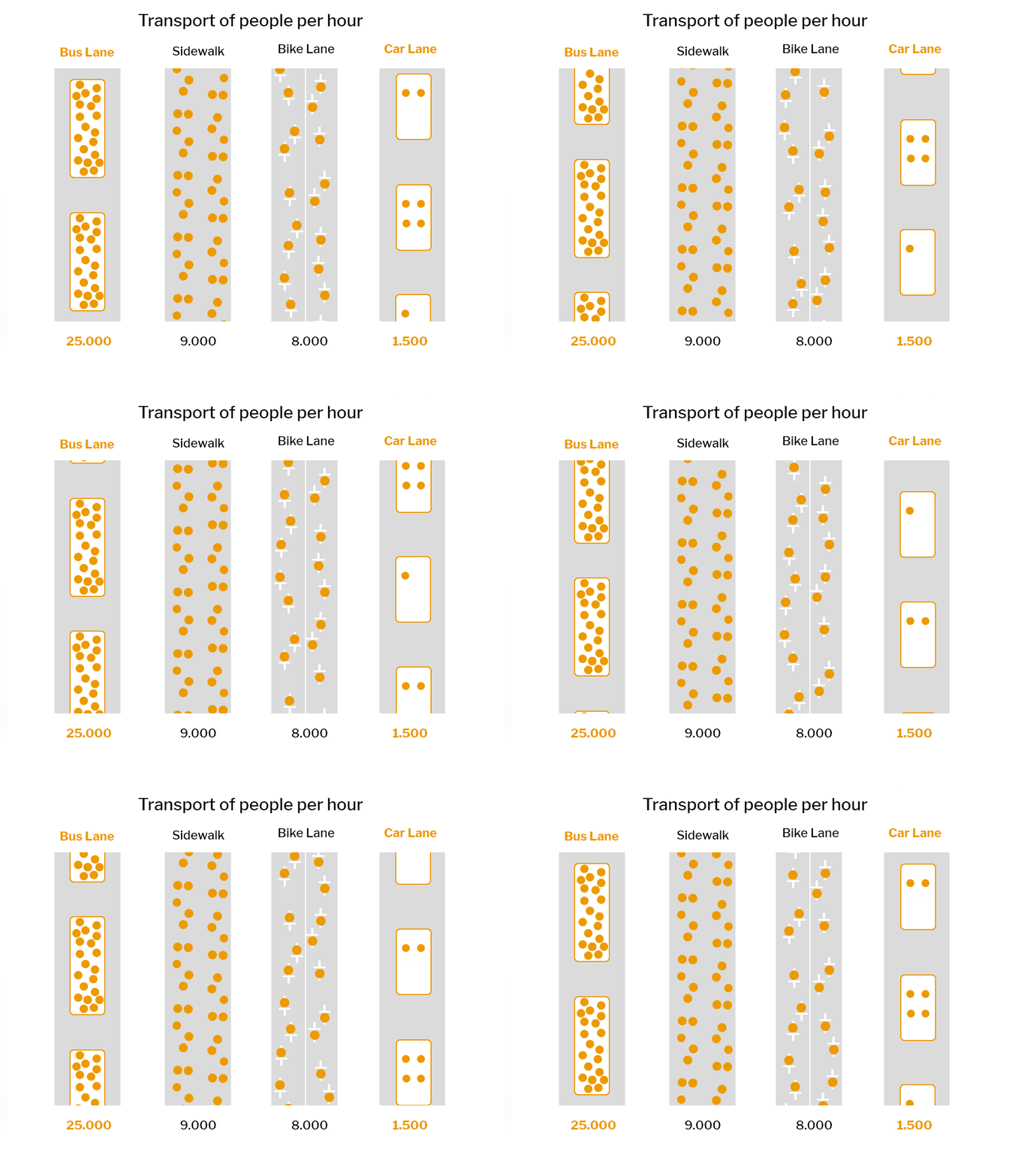
Therefore we need to rethink how to get from A to B with the least possible pollution impact. So how do we do that? The answer lies in sustainability. Using green electricity for fuel to go from one place to another. At the moment, everyone wants to use their own transport vehicle. They fill up the streets since only a few people occupy each vehicle, and this creates a lot of traffic, which then creates even more pollution, as fuel driven cars, busses and trucks let out a lot of carbon dioxide, when waiting at the traffic light.

Now we all need to reconsider the need for transportation and think about the option of going by public transportation instead. Most of the time we’re actually going the same way and we always hate sitting in traffic and wasting time. Time that could be better spend with family and friends.

So what if we changed our mobility behaviour and started using the public transportation? 
Many busses use fossil fuels. But what if we could boast about the public transportation in a whole city purely driven by electricity? The biggest issue with electromobility is the access to charging stations and the distance to travel on a single charging. But we need to dream big and have big goals for the future we want to go in and redesign towns. We need to make sure that the future generations can live and breathe clean air. This is what the transport system should enable.

Improved accessibility and mobility for all
In relation to the BBC series about redefining public transportation, that will be created in collaboration with UITP (The International Association of Public Transport) Simon Shelley, the Vice President of Programme Partnerships for BBC StoryWorks says:

“As we look towards the future of public transport, improved accessibility and mobility for all will play a critical role in the quality of life for both passengers and transport workers – the people at the heart of urban mobility. The story of public transport is that of a passionate and innovative community….”  CarMedialab supports this vision and offers software systems that give people access to the new mobility. Let’s get it on and use public transport!

How to keep track of your vehicle performance in real-time

Comprehensive daily vehicle monitoring with MOBILEvhm
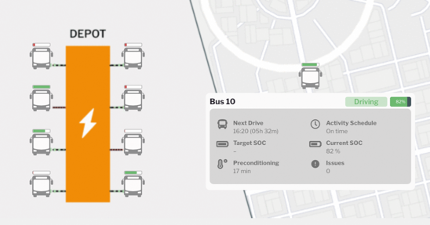
Visualizing the performance of your vehicles in real-time, accessing important performance data (operating hours, filling status and energy consumption, error codes and a lot more) and improving the vehicle performance by use of these data – you can do all that with MOBILEvhm (Vehicle Health Management). It allows full-scale day-to-day monitoring of your fleet when in operation.

With just one vehicle monitoring system you can keep track of your whole diesel or battery-driven fleet of buses and check their performance at all times, regardless of the vehicle manufacturer. In this demonstration, you will discover just how much MOBILEvhm can help improve the performance of your entire fleet.

What makes OCPP better for Smart Charging?

Different types of chargers and systems
When charging becomes more and more the norm, many different manufacturers will be offering their type of backend systems and their type of EV charging systems. This means that we will see a possible development of different types of chargers and systems. Eventually there will be a race of which types are the better.

OCPP in action

A similar type of discussion has been seen before when CDs and laserdiscs were introduced or if we go further back the VHS and the Betamax. Back then there was two different systems and only one of them could win. This time there’s a new compatibility-tool which makes it possible to manage more kinds of charging systems.

To manage these different systems OCPP is the key
As it is an international open source standard with no license, there is no restrictions of use for anyone. Using the Open Charge Point Protocol to connect and exchange communication between the charger and the charging network offers a more flexible solution as it creates an interoperability for equipment from different manufacturers. Other features that the OCPP offers is to remotely manage the charges, fix the rates and generate reports at the charging facility. It can even detect which EV charging station is available or reserved, which are active and charging a vehicle and which are not working. Furthermore, the status of the charger as well as it’s firmware can be updated without even being on-site.

Exchange of data between car, charging station and energy supplier

How to decide wether Smart Charging is the new future of mobility
Smart charging enables the ability to automatically adjust charging patterns, based on charging. 

To be more precise, there are four main advantages by which the Open Charge Point Protocol improves Smart Charging drastically.

  1. When using the EV charging station, the OCPP will control the supply to specific vehicles by putting limits on the maximum power that can be supplied by each charging gun.
  2. The OCPP Smart Charging allows priority charging for selected vehicles over others.
  3. Smart Charging helps regulate the total energy consumption and the associated cost by taking into account the factors such as load capacity, the current tariff for the electricity and the availability of renewable power.
  4. On the supply side, OCPP compliance with other protocols allows for integration with the grid to support it during peak demand time.

All in all there is no need to make a new “Betamax discussion” as the OCPP has everything covered as long as the charging system is compliant with the OCPP.

Consequently, when manufactures plan on developing new charging points, the main aspect they need to be aware of is the compliance with OCPP. As a result a flexible optimization, operation and maintenance of the charging system is guaranteed.

How Public Transport can save our Planet

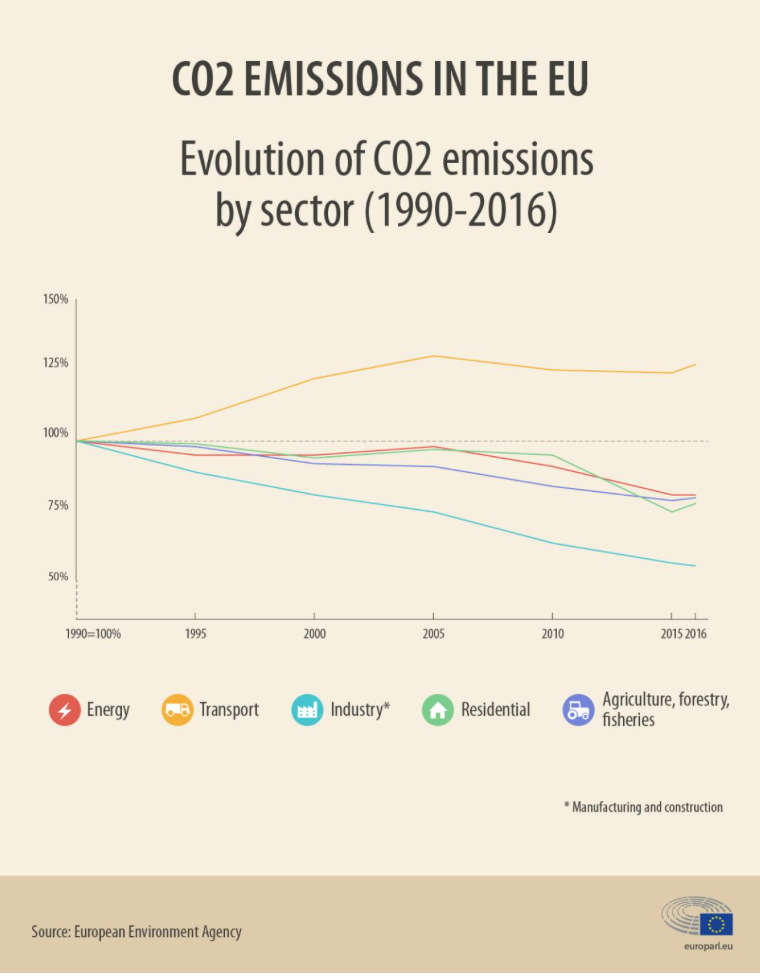
More and more we are concerned with the environment and the current state of the planet. Pollution and emissions from road transportation vehicles are still increasing.

https://www.europarl.europa.eu/news/de/headlines/society/20190313STO31218/co2-emissions-from-cars-facts-and-figures-infographics

https://www.eea.europa.eu/
CO2 Emissions from Transport on the Rise

The most sustainable form of Public Transport is currently electric buses
At the same time humanity is developing technology at a rapid pace to keep up with the environmental situation and help us solve this problem. We need to change from an emission-based transportation to a sustainable transportation model. At the moment the most sustainable way of public transportation that can be scaled is by electric buses.

The electric buses, or e-buses as they are also called, have become very popular. We face a new era where renewable energy is in high demand as emission-based energy seems to have an expiring date.

However, the decision of changing the whole fleet of buses in a city to a more sustainable solution is economically challenging, though necessary. And even when the fleet has been changed to electric buses, a lot of budget goes into the operation of the e-buses. This is part of the reason that the decision to change the fleet is not as easy as it might seem. It’s a complex decision as there are many aspects that need to be taken into consideration. 

The type of vehicle, the battery capacity ranges, weather and even the topography of the routes the buses will drive all have an impact on the expenses, as well as the different charging scenarios. All this adds up to weighing of costs.

E-Busses are charged with Priority

How is the transformation of the fleet successful?
This is where the charging management system MOBILEcharge helps you in collecting data through the software system integrated in the charging stations. The EV electric management software measures the need for charging the buses based on energy storage and how much power is left. It also makes sure to distribute evenly the charging, avoiding peak hours for electricity, so you get the best prices for charging. The intelligent charging process is controlled automatically and always gives you an overview of the operating costs.

Using MOBILEcharge, a smart load management system provides you with enough data to plan your vehicles charging needs and plan the routes efficiently. Always take into consideration the options you have and the unique features you get to review historical and real time energy consumption. Just the economic aspect alone of the energy consumption compared to previous carbon-based energy consumption and the comparison of pollution will give you incentive enough to choose for a greener future with MOBILEcharge.

Wallbox and CarMedialab collaborate in Smart Charging

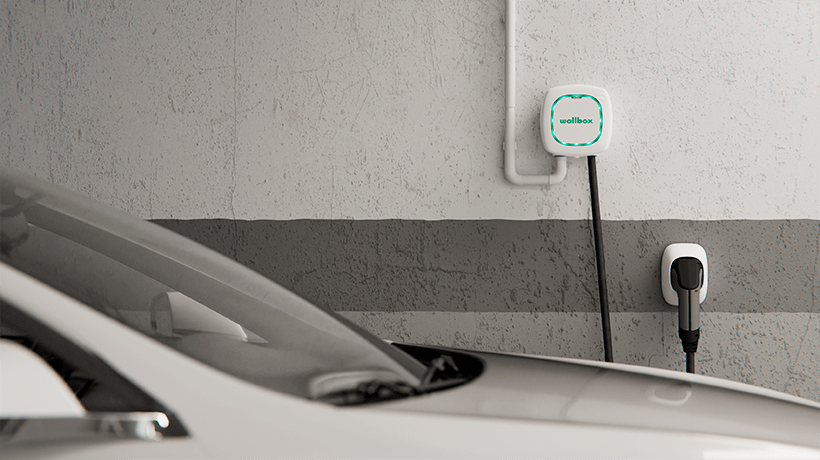
Wallbox, together with CarMedialab, are running OCPP software in their Copper SB and Pulsar Plus range. This means the operating information inside those chargers can now be used with other software platforms, not just myWallbox.

For charge point operators, this opens up the opportunity to integrate Wallbox chargers with their infrastructure, knowing with confidence they’ll be compatible with their software programs.

Going forward collaboration is expected to continue between the two companies as they work together on newer versions of OCPP.

Wallbox carmedialab smart charging at home

About Wallbox
Wallbox is a leading energy management company that manufactures smart charging solutions for electric vehicles. Combining state-of-the-art technology with exceptional design, Wallbox creates a smart ecosystem that improves the way we manage, use and store energy. Created in 2015 and with its headquarters in Barcelona, Wallbox’s mission is to facilitate the adoption of electric vehicles today to make more sustainable use of energy tomorrow. Envisioning a world free of fossil fuels, Wallbox technology enables people to create, use and share renewable energy in ways they never imagined. It currently sells to more than 40 countries and has 250 staff spread across offices in Europe, Asia, and America, as well as 2 factories of its own. Wallbox offers four types of chargers, including Quasar, the world’s smallest and lightest bidirectional charger for home use with advanced two-way charging technology. It was recognized with the highest distinction by CES the world’s leading technology trade show for the industry. During the first half of 2020, Wallbox completed a Series A round of investment of 23 million euros.

About CarMedialab
CarMedialab is a pioneer in Smart Charging. More than 10 years ago the company contributed to the first development of a powerline-based ISO15118 and OCPP to be integrated into charging stations – with its own or 3rd party controllers. Furthermore, with MOBILEcharge CarMedialab provides a charge management system dedicated to public transportation.

How does Smart Charging work?

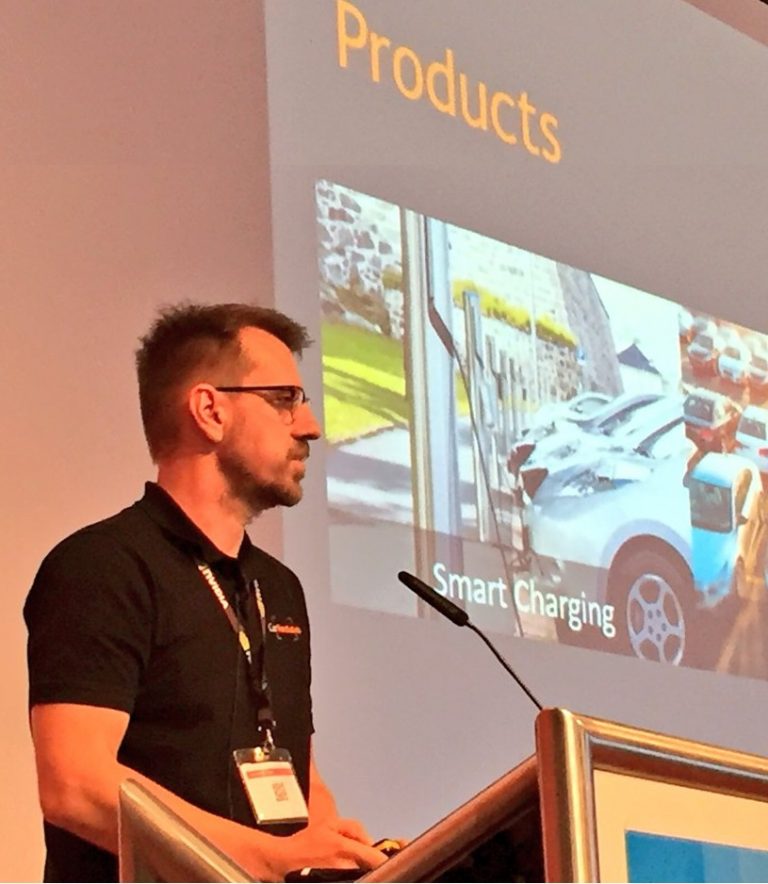
Our CEO Heiko Bauer will give a presentation on Smart Charging at the Forum-Elektromobilität at the Spree Palais am Dom in Berlin on June 02, 2017. The Forum for Electromobility meets in this year’s framework. Many exciting topics await you, including a presentation by our CEO Heiko Bauer on the topic of Smart Charging.

For a better evaluation of your measurement data, you now receive additional photos. You tell us your trigger moments and we deliver pictures 10 seconds before and after the event with a rate of up to 10 pictures per second. Afterwards you know if your measurement was positive.


Why not visit us at the lecture?
When: June 02, 2017
Where: Spree Palais, Berlin

CEO Heiko Bauer​


We are looking forward to your visit and to lots of exciting impressions at the Forum in Berlin.
You can find more information about the Forum here.

Heiko Bauer lecture Smart Charging