Tag: OCPP

VDV 463 makes charge planning easy

The right interface determines your daily routine 
You don’t have time to plan and keep track of every charging process and every preconditioning request individually? Do you think it’s too time-consuming to constantly check the charge status of your buses? You are afraid that a bus will not make its tour with its current charge? Then VDV 463 might be just the solution you’re looking for, because it is a decisive interface to remove the stress around your daily operations.

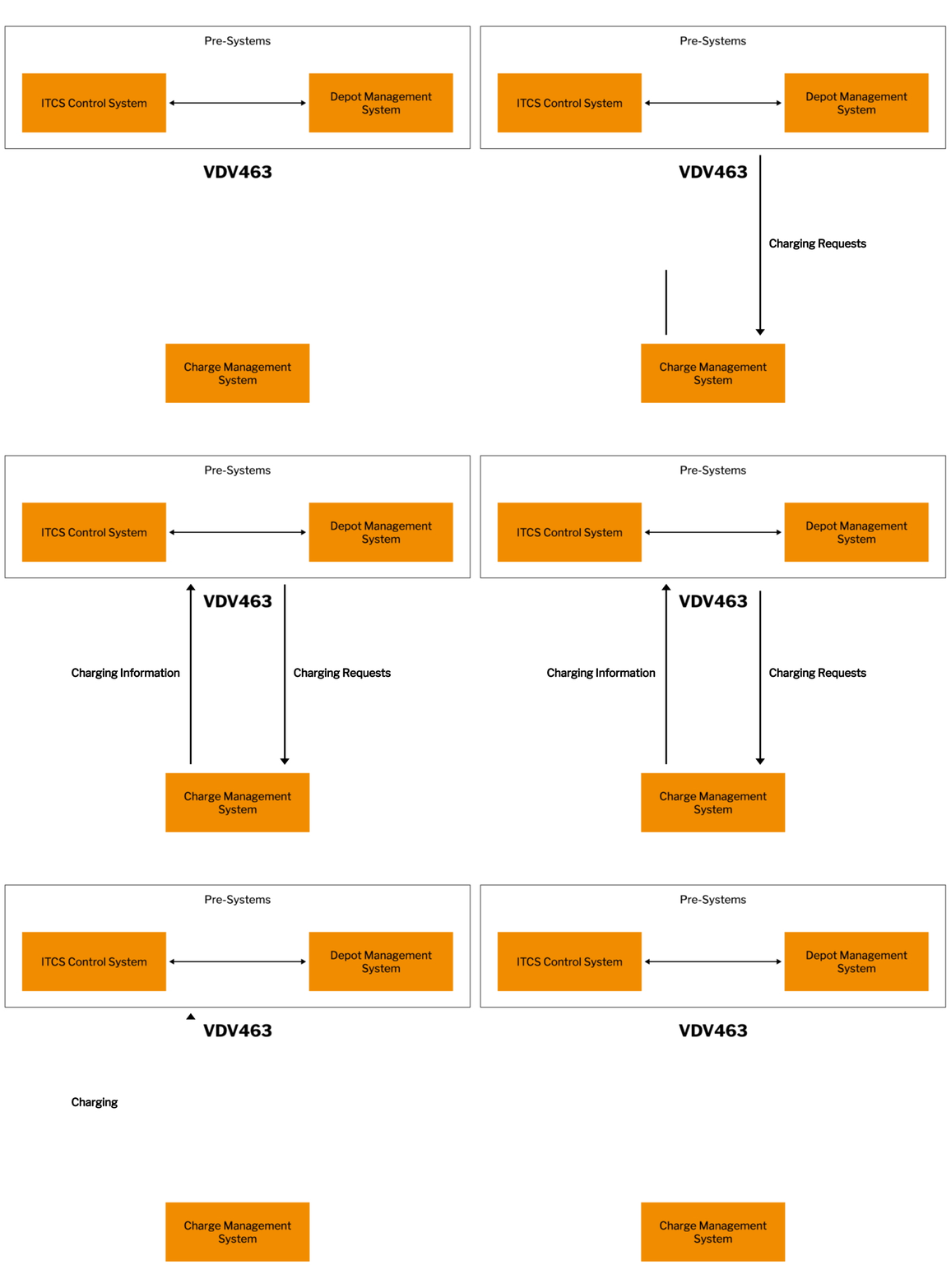
The challenge with public transport becoming increasingly electric-powered lies with overall systems that enable comprehensive data exchange. Communication between the vehicle and the charging station (ISO 15118) and between the charging station and the Charge Management System (OCPP) has already been standardized, but there has not been a uniform format for the Charge Management System and the cross-modal pre-system. With a well-defined standard for communication, companies no longer have to develop their own solutions, which have long integration times and involve a lot of effort. This is exactly what VDV 463 is about: an interface between the Charge Management System and the Pre-Systems such as the Intermodal Transport Control System (ITCS) or the Depot Management System (BMS).
How VDV 463 works
How VDV 463 works

Functionality and application
The above mentioned systems using this interface acquire up-to-date data, which is continuously exchanged between the systems in both directions. The interface has been developed for three different use cases.

  1. Manage circulation and provide loading request from ITCS and BMS to Charge Management System: new request or charge request
  2. Control loading process and transfer information about loading processes from Charge Management System to ITCS
  3. Implement preconditioning request from Pre-System in Charge Management System and return current status

Your main advantages

  • Flexibility – open interface and thus no vendor lock-in
  • Ensure compatibility and thus simplify processes considerably

Click here for VDV 463:

https://knowhow.vdv.de/documents/463/

MOBILEcharge in use:

https://www.initse.com/dede/news-resources/knowledge-database/press-releases/2021/lade-und-depotmanagement-fuer-leipzigs-elektrobusse/

You can get to know our proven and widely used Charge Management System MOBILEcharge here:

https://www.carmedialab.com/en/products/public-transport/charge-management/

What makes OCPP better for Smart Charging?

Different types of chargers and systems
When charging becomes more and more the norm, many different manufacturers will be offering their type of backend systems and their type of EV charging systems. This means that we will see a possible development of different types of chargers and systems. Eventually there will be a race of which types are the better.

OCPP in action

A similar type of discussion has been seen before when CDs and laserdiscs were introduced or if we go further back the VHS and the Betamax. Back then there was two different systems and only one of them could win. This time there’s a new compatibility-tool which makes it possible to manage more kinds of charging systems.

To manage these different systems OCPP is the key
As it is an international open source standard with no license, there is no restrictions of use for anyone. Using the Open Charge Point Protocol to connect and exchange communication between the charger and the charging network offers a more flexible solution as it creates an interoperability for equipment from different manufacturers. Other features that the OCPP offers is to remotely manage the charges, fix the rates and generate reports at the charging facility. It can even detect which EV charging station is available or reserved, which are active and charging a vehicle and which are not working. Furthermore, the status of the charger as well as it’s firmware can be updated without even being on-site.

Exchange of data between car, charging station and energy supplier

How to decide wether Smart Charging is the new future of mobility
Smart charging enables the ability to automatically adjust charging patterns, based on charging. 

To be more precise, there are four main advantages by which the Open Charge Point Protocol improves Smart Charging drastically.

  1. When using the EV charging station, the OCPP will control the supply to specific vehicles by putting limits on the maximum power that can be supplied by each charging gun.
  2. The OCPP Smart Charging allows priority charging for selected vehicles over others.
  3. Smart Charging helps regulate the total energy consumption and the associated cost by taking into account the factors such as load capacity, the current tariff for the electricity and the availability of renewable power.
  4. On the supply side, OCPP compliance with other protocols allows for integration with the grid to support it during peak demand time.

All in all there is no need to make a new “Betamax discussion” as the OCPP has everything covered as long as the charging system is compliant with the OCPP.

Consequently, when manufactures plan on developing new charging points, the main aspect they need to be aware of is the compliance with OCPP. As a result a flexible optimization, operation and maintenance of the charging system is guaranteed.

Wallbox and CarMedialab collaborate in Smart Charging

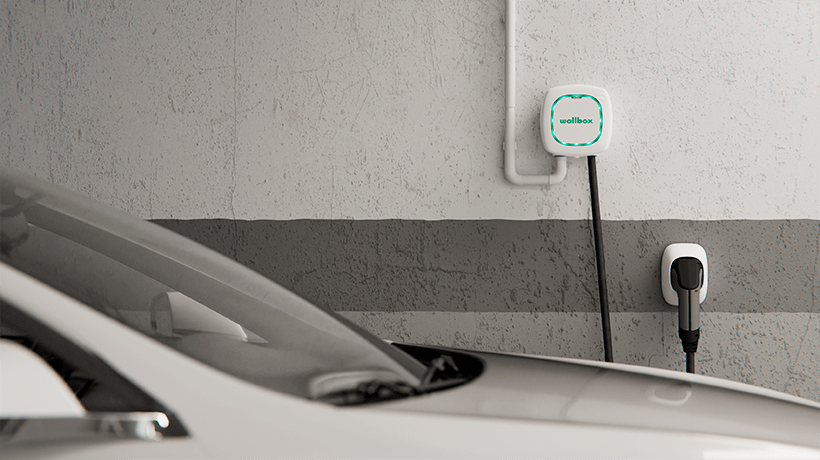
Wallbox, together with CarMedialab, are running OCPP software in their Copper SB and Pulsar Plus range. This means the operating information inside those chargers can now be used with other software platforms, not just myWallbox.

For charge point operators, this opens up the opportunity to integrate Wallbox chargers with their infrastructure, knowing with confidence they’ll be compatible with their software programs.

Going forward collaboration is expected to continue between the two companies as they work together on newer versions of OCPP.

Wallbox carmedialab smart charging at home

About Wallbox
Wallbox is a leading energy management company that manufactures smart charging solutions for electric vehicles. Combining state-of-the-art technology with exceptional design, Wallbox creates a smart ecosystem that improves the way we manage, use and store energy. Created in 2015 and with its headquarters in Barcelona, Wallbox’s mission is to facilitate the adoption of electric vehicles today to make more sustainable use of energy tomorrow. Envisioning a world free of fossil fuels, Wallbox technology enables people to create, use and share renewable energy in ways they never imagined. It currently sells to more than 40 countries and has 250 staff spread across offices in Europe, Asia, and America, as well as 2 factories of its own. Wallbox offers four types of chargers, including Quasar, the world’s smallest and lightest bidirectional charger for home use with advanced two-way charging technology. It was recognized with the highest distinction by CES the world’s leading technology trade show for the industry. During the first half of 2020, Wallbox completed a Series A round of investment of 23 million euros.

About CarMedialab
CarMedialab is a pioneer in Smart Charging. More than 10 years ago the company contributed to the first development of a powerline-based ISO15118 and OCPP to be integrated into charging stations – with its own or 3rd party controllers. Furthermore, with MOBILEcharge CarMedialab provides a charge management system dedicated to public transportation.