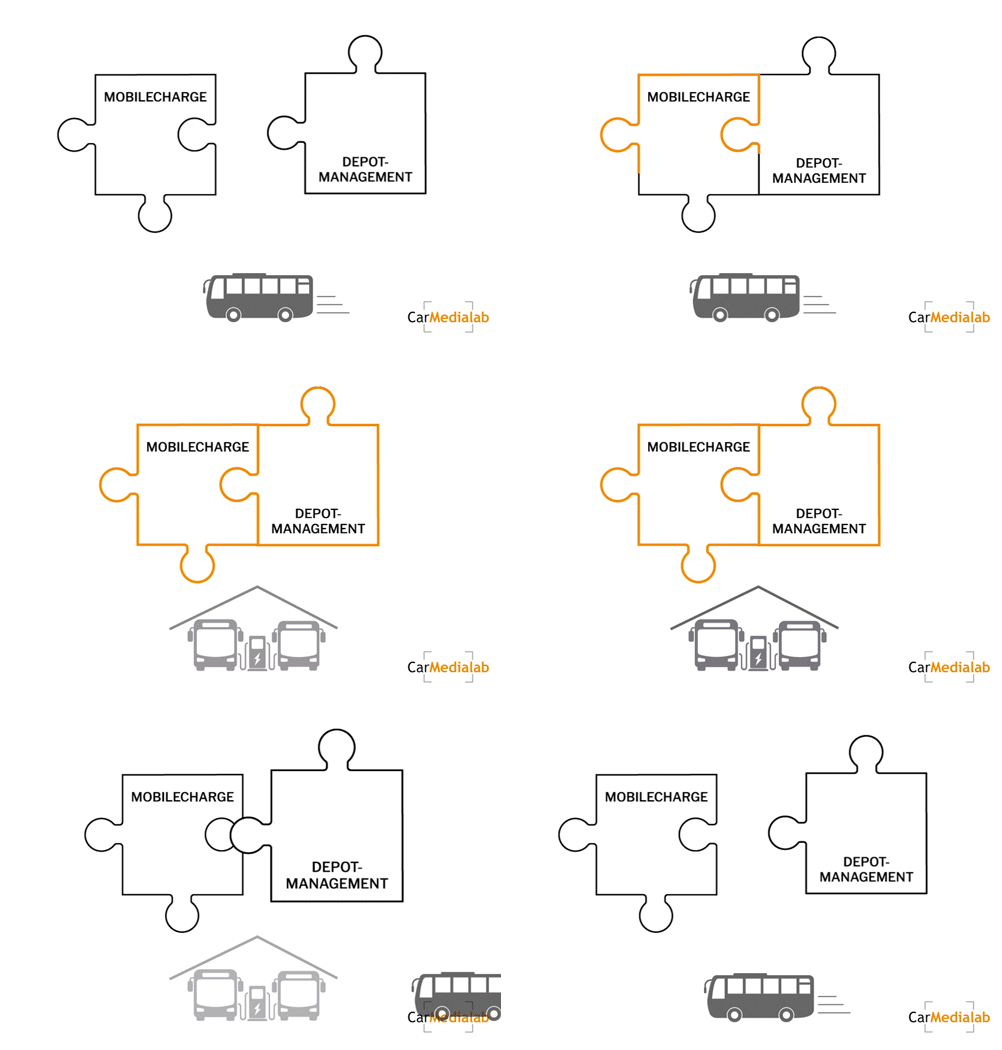
Benefit from our experience and implement an intelligent charging concept in your e-bus fleet. The following three factors will bring your project to success: Taking an iterative approach, maintaining close communication between those involved, ensuring that system components are interoperable, and having an experienced partner on hand will all play an essential role.
With its software application MOBILEcharge, CarMedialab is involved in a range of projects since 2019. More and more transport companies start to realize that managing a fleet with this new type of refuelling is so complex that it requires the help of an intelligent charging system.
Are you considering a transition to electric power for your bus fleet?
Future-proof charging management thanks to VDV-Normen Users of our charging management system MOBILEcharge benefit from the interoperability of the software to efficiently charge many electric buses. But what does that mean exactly?
Interoperability generally means that a system can work together with other systems. If the system’s interfaces are open, collaboration can work with two or more programs or systems. Thus, multiple systems can be integrated without problems of access or implementation.
Interoperability enables the integration of existing systems
At Rhein-Neckar-Verkehr GmbH (rnv) for example, e-buses, as well as passenger cars, are charged at four depots with over 100 charging points. Various interfaces ensure optimal functionality: VDV 463 between charging management and depot management system (DMS) at the customer’s site and VDV 261 for communication between charging management and vehicle to control preconditioning (Interior and battery are tempered in time). Compliance with these VDV standards enables a high degree of interoperability. GoRaleigh based in the USA also controls and monitors the charging activities of the e-buses with MOBILEcharge in connection with the control centre. Changes can be made permanent so that charging can always be carried out in a cost-saving manner.
Conveniently charge and monitor e-buses Through our charging management system MOBILEcharge, all charging processes can not only be primarily controlled but also monitored in real-time. Charging with reduced amperage increases battery life while lowering overall energy demand.
Your contact person: Maximilian Haag Phone +49.7251.7240.161 maximilian.haag@carmedialab.com
Each bus reduces CO2 emissions by 135 tons per year The dual city of Champaign-Urbana is using CarMedialab’s MOBILEvhm and MOBILEefficiency software on 16 buses in the USA. Fourteen of them are e-buses, two of which are powered by hydrogen. The location is a university town with a population of about 88,000 in the state of Illinois, south of Chicago.
Completely emission-free! Mass Transit District is the first transit agency in the country with 100% sustainable hydrogen buses
The special thing about the project in Champaign-Urbana is that this city is one of the rare places with emission-free hydrogen production: Instead of producing hydrogen from the extraction of natural gas and thus releasing greenhouse gases, an electrolyzer is used. This splits water into hydrogen and oxygen – with the help of solar energy.
“The Champaign-Urbana Mass Transit District is certainly a pioneer because this system emits only water vapor instead of greenhouse gases, and that’s leading the way in the fight against climate change,” said Nuria Fernandez, director of the Federal Transit Administration. For those interested in the benefits of e-buses, feel free to stop by our latest blog post.
For an environmentally friendly future in public transport – setting a green example! Do you know this too? You’re riding your bike to work, school or university and suddenly you notice by the smell: a diesel bus stops next to you.
Noise and odor pollution are the order of the day. Many countries are setting a good example: China, for example, has the largest share of all electric buses worldwide running thanks to subsidies, and Salzburg is relying on the zero-emission OBUS, short for “Oberleitungsbus”. Germany, for example, can point to the VHH in Hamburg or the LVB in Leipzig. In the meantime, every transport company should decide in the long term to convert to electric buses, because this process takes time. So: If you want low-congestion as well as climate-neutral local transport by 2030, you should get started now!
What are the costs of an e-bus? The purchase price for an e-bus is higher than for a conventional diesel bus, but there are still many advantages. The German Environment Ministry’s subsidy program covers up to 80 percent of the additional costs incurred compared to a diesel bus, and also up to 40 percent of the costs required for startup, such as driver training. As with electric cars, the higher cost of the investment is recouped through lower expenses in operation as well as for maintenance.
Why are e-buses so efficient? In “stop and go” operation of public transport buses, both energy and brakes are conserved. This works thanks to instantaneous full torque, which an internal combustion engine cannot provide in this way. In addition, a part of the energy is returned to the batteries during braking. Among experts, this is called “recuperation”.
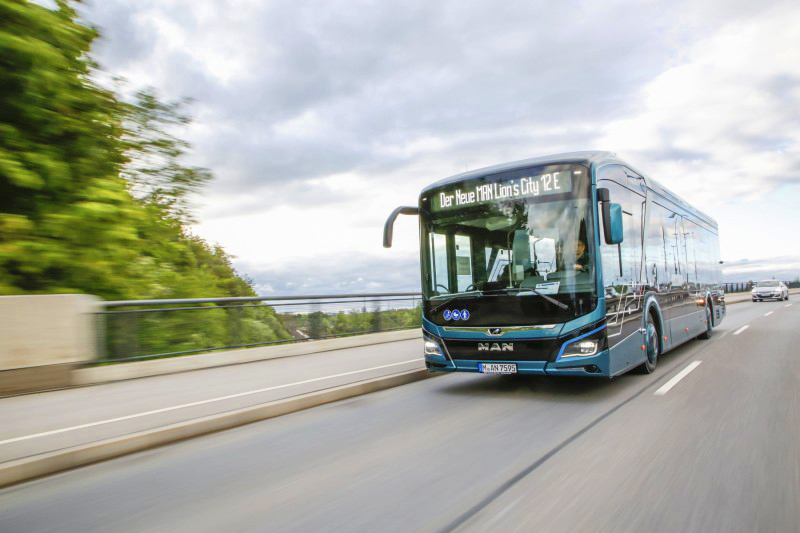
How do driving and charging work on an e-bus? E-buses drive like normal diesel buses with automatic transmission. They now have a range of several hundred kilometers – so they are a real option for public transport.
Either the driver stops at a charging station and connects the bus to the charging cable or it charges wirelessly, the latter being increasingly the case. Thus, the driver does not even have to get off the bus – very convenient, in other words. There are also various concepts for flexible use: overnight charging in the depot, intermediate charging at stops, or mixed forms. This is also where the difference to the diesel bus comes in: refueling must take place more often and charging must be organized intelligently.
CarMedialab’s software is ready to do just that. MOBILEcharge enables intelligent charging.
As the world is changing and the population is growing continuously, the carbon footprint we leave behind grows bigger and bigger as well.
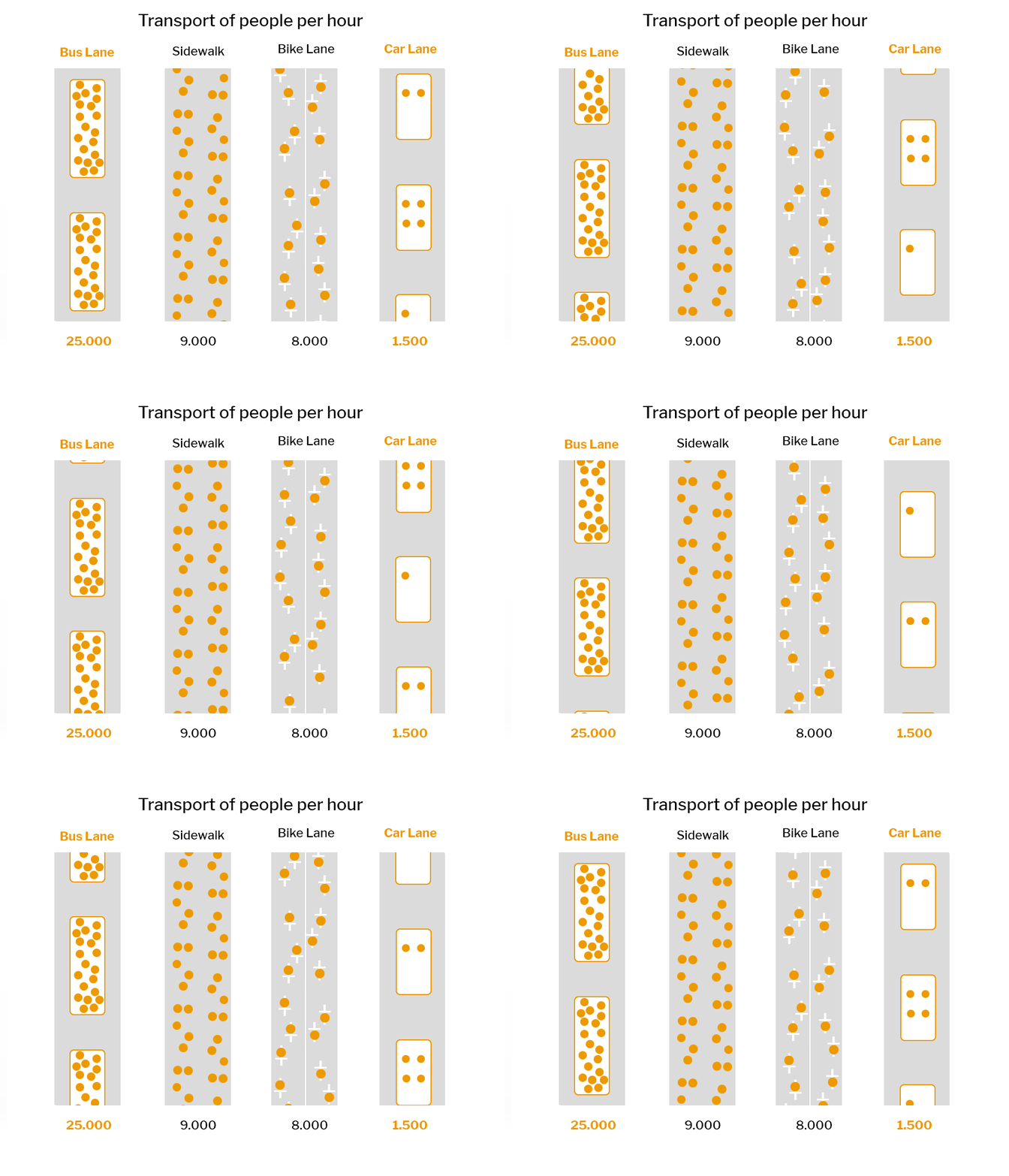
Therefore we need to rethink how to get from A to B with the least possible pollution impact. So how do we do that? The answer lies in sustainability. Using green electricity for fuel to go from one place to another. At the moment, everyone wants to use their own transport vehicle. They fill up the streets since only a few people occupy each vehicle, and this creates a lot of traffic, which then creates even more pollution, as fuel driven cars, busses and trucks let out a lot of carbon dioxide, when waiting at the traffic light.
Now we all need to reconsider the need for transportation and think about the option of going by public transportation instead. Most of the time we’re actually going the same way and we always hate sitting in traffic and wasting time. Time that could be better spend with family and friends.
So what if we changed our mobility behaviour and started using the public transportation? Many busses use fossil fuels. But what if we could boast about the public transportation in a whole city purely driven by electricity? The biggest issue with electromobility is the access to charging stations and the distance to travel on a single charging. But we need to dream big and have big goals for the future we want to go in and redesign towns. We need to make sure that the future generations can live and breathe clean air. This is what the transport system should enable.
Improved accessibility and mobility for all In relation to the BBC series about redefining public transportation, that will be created in collaboration with UITP (The International Association of Public Transport) Simon Shelley, the Vice President of Programme Partnerships for BBC StoryWorks says:
“As we look towards the future of public transport, improved accessibility and mobility for all will play a critical role in the quality of life for both passengers and transport workers – the people at the heart of urban mobility. The story of public transport is that of a passionate and innovative community….” CarMedialab supports this vision and offers software systems that give people access to the new mobility. Let’s get it on and use public transport!
MOBILEcharge now also speaks Swedish. With our charging management, we contribute our know-how for reliable operation of electric buses. Initially, 12 e-buses will be charged at the brand-new depot of Gamla Uppsala Buss AB (GUB). In addition to the planning system, we will also integrate the network operator’s transformer station and, of course, ensure automated preconditioning of the vehicles. In keeping with the motto: “Are you still charging or are you already driving?”
Comprehensive daily vehicle monitoring with MOBILEvhm Visualizing the performance of your vehicles in real-time, accessing important performance data (operating hours, filling status and energy consumption, error codes and a lot more) and improving the vehicle performance by use of these data – you can do all that with MOBILEvhm (Vehicle Health Management). It allows full-scale day-to-day monitoring of your fleet when in operation.
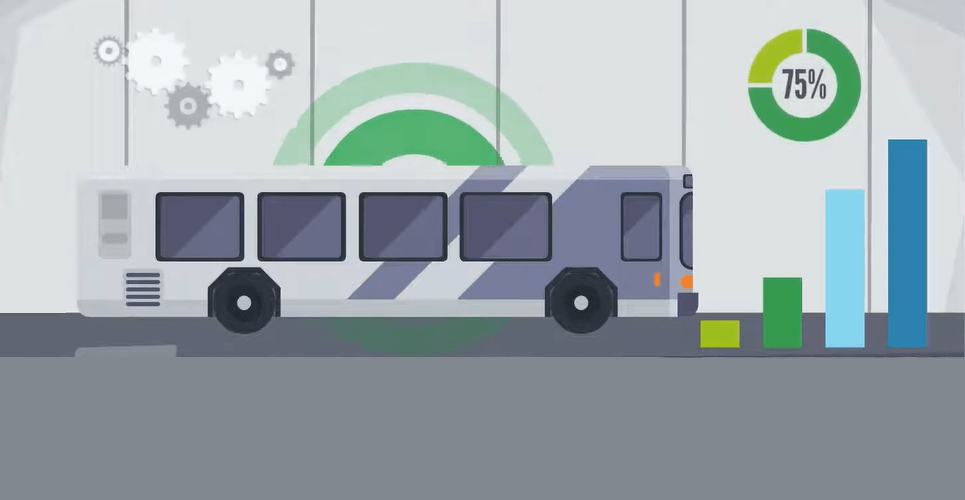
With just one vehicle monitoring system you can keep track of your whole diesel or battery-driven fleet of buses and check their performance at all times, regardless of the vehicle manufacturer. In this demonstration, you will discover just how much MOBILEvhm can help improve the performance of your entire fleet.